NURS NRNP 6645 Week 8 Assignment Psychotherapy for Clients With Addictive Disorders
Addictive disorders can be particularly challenging for clients. Not only do these disorders typically interfere with a client’s ability to function in daily life, but they also often manifest as negative and sometimes criminal behaviors. Sometime clients with addictive disorders also suffer from other mental health issues, creating even greater struggles for them to overcome. In your role, you have the opportunity to help clients address their addictions and improve outcomes for both the clients and their families.
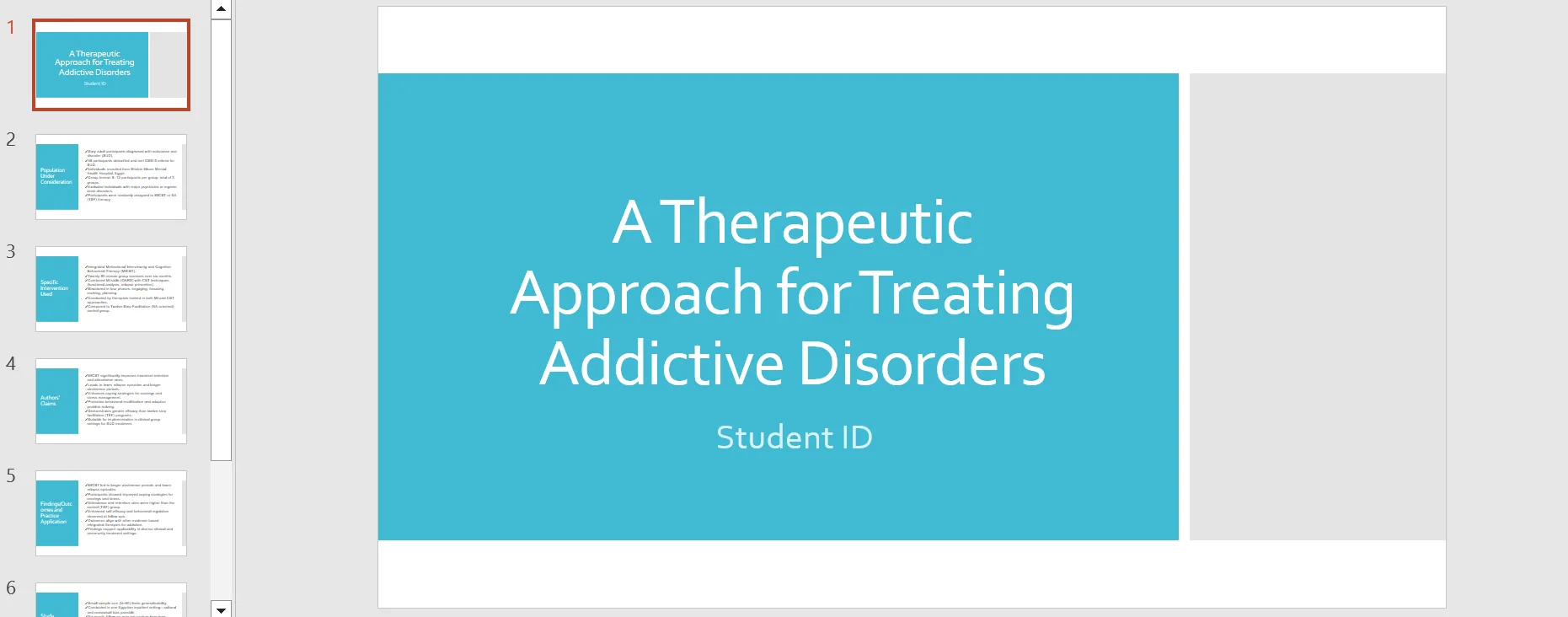
In a 5- to 10-slide PowerPoint presentation, address the following. Your title and references slides do not count toward the 5- to 10-slide limit.
- Provide an overview of the article you selected.
- What population (individual, group, or family) is under consideration?
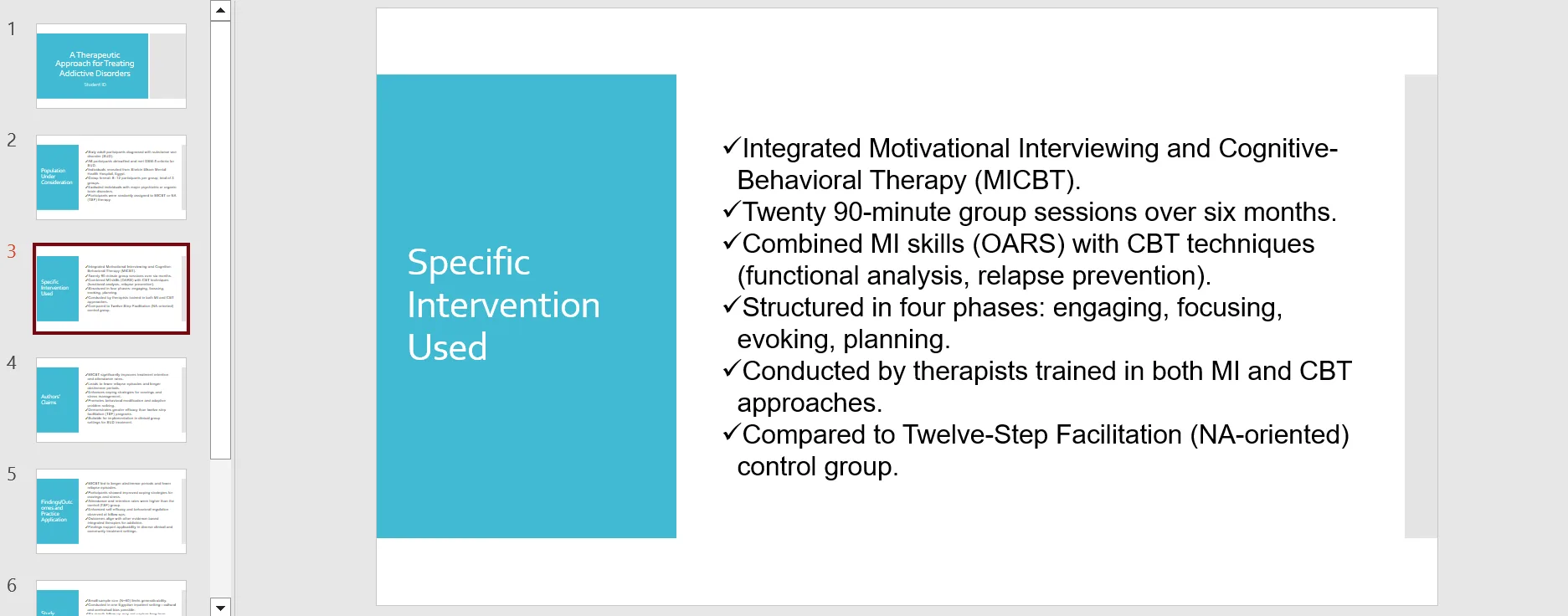
- What was the specific intervention that was used? Is this a new intervention or one that was already studied?
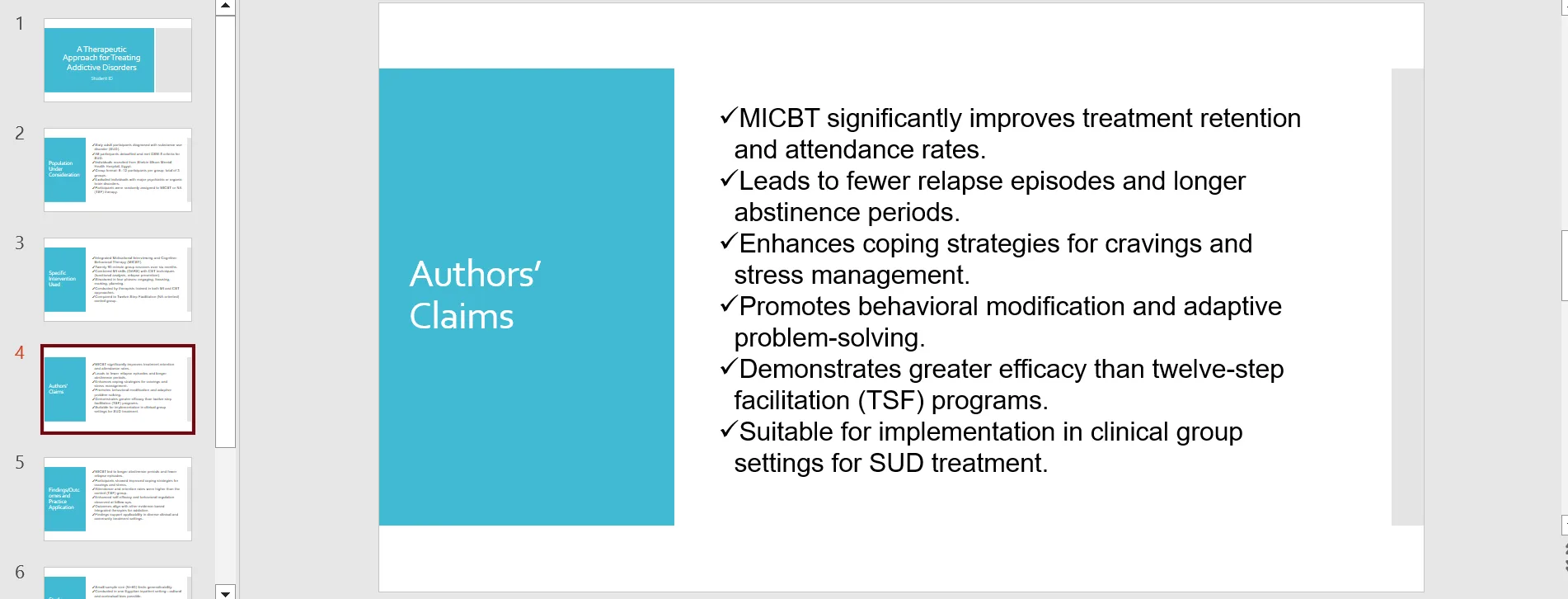
- What were the author’s claims?
- Explain the findings/outcomes of the study in the article. Include whether this will translate into practice with your own clients. If so, how? If not, why?
- Explain whether the limitations of the study might impact your ability to use the findings/outcomes presented in the article.
- Use the Notes function of PowerPoint to craft presenter notes to expand upon the content of your slides.
- Support your response with at least three other peer-reviewed, evidence-based sources. Explain why each of your supporting sources is considered scholarly. Provide references to your sources on your last slide. Be sure to include the article you used as the basis for this Assignment.
Solution
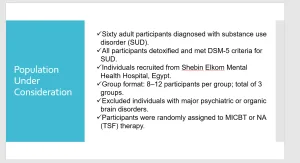
The study focused on adults aged 18–50 diagnosed with substance use disorder (SUD) and detoxified before therapy, forming a clinically stable inpatient sample at Shebin Elkom Mental Health Hospital in Egypt. This individual-to-group transition model aligns with findings by Amin et al. (2023), who highlighted that structured CBT-based therapy effectively addresses substance-related psychological distress in similar adult populations.
The homogeneous group design, excluding those with severe psychiatric or neurological conditions, follows best practices for treatment fidelity in addiction settings. Moreover, as Chou et al. (2024) emphasized, family and group engagement improves treatment adherence and recovery outcomes, validating the MICBT group-based approach used by Hossam et al. (2023).
Get the full presentation for only $10.00